The Quiet Grief: How Animals Mourn Other Pets
Published in Cats & Dogs News
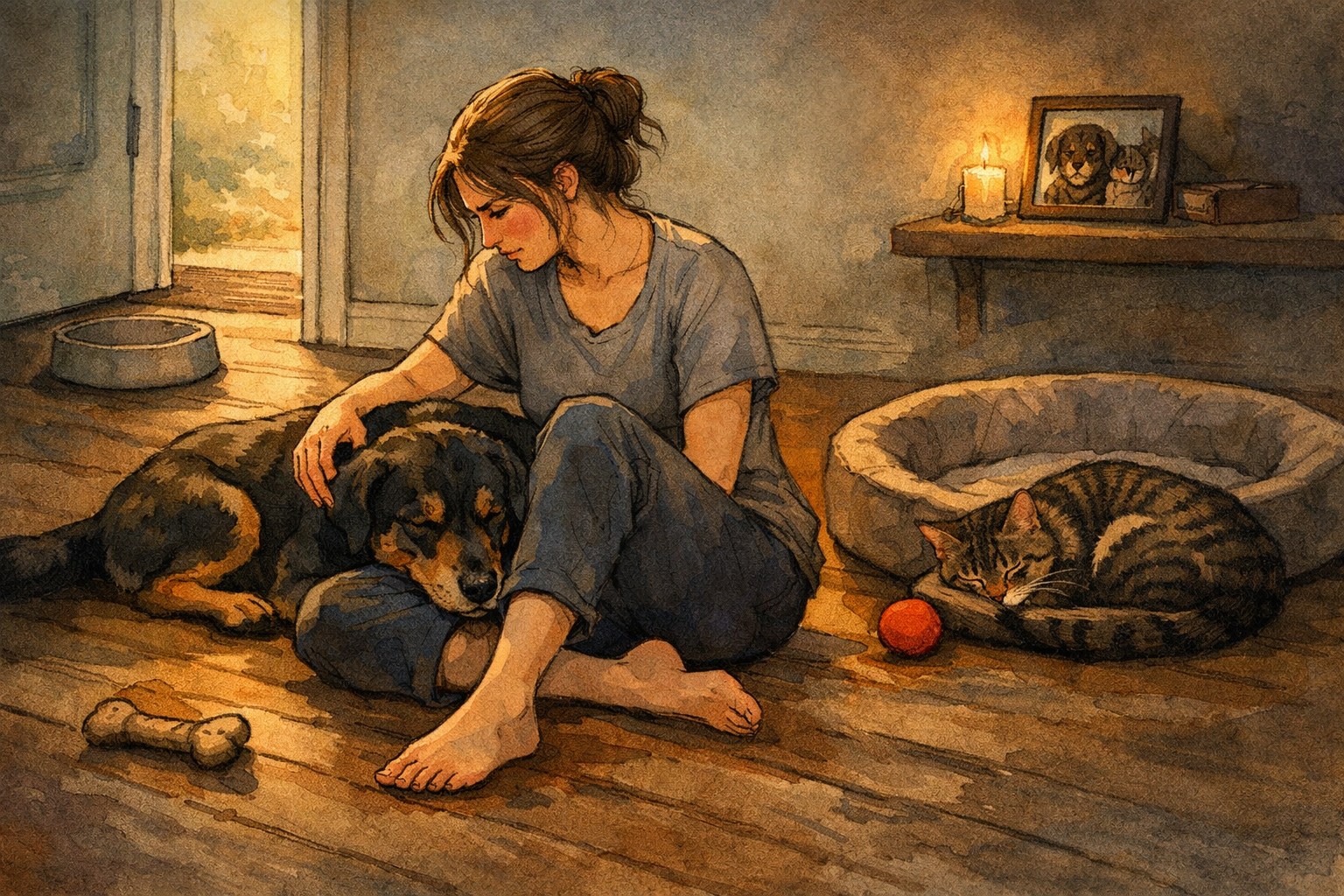
By the time the house feels empty, most people have already noticed something else is wrong.
The food bowl remains untouched. A dog waits by the back door long after the familiar footsteps will never return. A cat sleeps in a place it had ignored for years, pressed into a lingering scent like a question with no answer. These moments often pass without ceremony, overshadowed by human grief. But they are not incidental. They are grief, too—quieter, less legible, and no less real.
For decades, animal mourning was dismissed as anthropomorphic projection, a sentimental misreading of instinctual behavior. Animals, the argument went, react only to disruption, not loss. They miss routines, not individuals. Yet mounting research and everyday observation tell a more complicated story. Animals do not simply notice absence; they respond to it in ways that closely resemble mourning.
Recognizing Grief Without Words
Grief in animals does not announce itself with tears or eulogies. It emerges sideways, in behavior that seems puzzling or even inconvenient to human caregivers. Appetite changes are common. Sleep patterns shift. Social animals may withdraw, while others become unusually clingy. Some vocalize more. Others fall into prolonged stillness.
In multi-pet households, these behaviors are often misinterpreted as stress or confusion. But context matters. When these changes follow the death or disappearance of a bonded companion, the pattern is difficult to ignore. Dogs that once played relentlessly may lose interest in toys. Cats that tolerated solitude may begin following their humans from room to room. The behaviors persist beyond the initial disruption and resolve slowly, if at all.
What distinguishes grief from routine disruption is duration and specificity. Animals do not simply “reset” once feeding schedules stabilize. They seek the lost individual, return to shared spaces, and react to familiar sounds or smells associated with them. These responses suggest memory and emotional attachment—not mere habit.
Bonded Animals, Broken Systems
Social species form emotional bonds as a survival strategy, but those bonds take on individual meaning. Dogs raised together often develop complementary roles—one alert, one cautious; one confident, one deferential. Cats that groom each other regulate stress hormones through touch. When one animal disappears, the system collapses.
Veterinary behaviorists have documented cases where surviving animals exhibit symptoms analogous to depression: lethargy, weight loss, decreased immune function. In some instances, elderly pets decline rapidly after the loss of a long-term companion, even when medical tests reveal no acute illness.
This is not coincidence. Social bonds shape neurochemical regulation. Oxytocin, dopamine, and cortisol levels are influenced by companionship, particularly in species that evolved cooperative living strategies. Remove the bond, and the animal’s internal equilibrium is disturbed.
When Humans Miss the Signs
Human caregivers often underestimate animal grief because it does not mirror human expression. We look for visible distress, not subtle behavioral drift. When a grieving pet becomes quieter, we may mistake calm for adjustment. When appetite wanes, we blame age or picky eating.
Compounding the problem is timing. Human grief tends to be acute and front-loaded. Animal grief is often delayed, emerging weeks after the loss, once environmental changes settle and the absence becomes undeniable. By then, routines have resumed, and attention has shifted.
There is also discomfort in acknowledging animal grief. To do so requires recognizing emotional continuity across species—a notion that unsettles long-standing assumptions about human exceptionalism. It is easier to frame animal behavior as mechanical than to confront the possibility of shared emotional architecture.
Smell, Space, and Memory
One of the most overlooked elements of animal mourning is scent. For animals, smell is memory. When a companion dies or is removed abruptly, their scent remains embedded in bedding, furniture, and shared paths. Animals return to these locations repeatedly, sniffing with deliberate focus.
Some veterinarians recommend allowing surviving pets to see or smell the deceased animal’s body when possible, particularly in clinical euthanasia settings. While emotionally difficult for humans, this exposure appears to help animals process the loss, reducing prolonged searching behavior.
In cases where an animal disappears without explanation—a runaway cat, a pet surrendered without the companion’s presence—the absence can be more distressing. The animal continues to search because the sensory narrative remains unresolved.
Species Differences, Shared Patterns
Dogs tend to externalize grief. They pace, whine, seek reassurance. Cats internalize it, retreating into altered routines and quieter spaces. Small mammals, often dismissed as too simple to grieve, show marked changes in activity and social engagement after the loss of a bonded cage-mate.
Birds, particularly parrots and corvids, may vocalize less or refuse food after losing a companion. In extreme cases, birds have been observed plucking feathers or engaging in repetitive stress behaviors following loss.
Despite species-specific expression, the underlying pattern is consistent: loss disrupts emotional regulation, and recovery is gradual, not automatic.
How Humans Can Help—Without Forcing It
There is no universal prescription for helping a grieving animal, but there are principles. Stability matters. Maintain routines without rigidity. Offer presence without intrusion. Allow the animal to withdraw without interpreting it as rejection.
Avoid rushing replacement. Introducing a new pet too quickly can compound stress, particularly if the surviving animal is still orienting itself to absence. When a new companion is eventually introduced, gradual exposure respects the animal’s emotional timeline.
Perhaps most importantly, acknowledge the grief. Talk to the animal. Sit with them. Grief does not require language to be recognized; it requires witness.
What Animal Grief Teaches Us
Animal mourning challenges a convenient fiction: that emotion requires narrative sophistication to be real. Animals do not tell stories about loss, but they live its consequences. They adapt, eventually, but adaptation is not indifference.
In recognizing animal grief, humans are forced to reconsider the emotional continuity that binds social species together. The same evolutionary pressures that produced attachment, cooperation, and care also produced vulnerability to loss. Grief is not a malfunction. It is the cost of connection.
The quiet grief of animals unfolds at ground level—on familiar rugs, beside empty bowls, in places shared and now half-occupied. It asks for no validation. It simply exists, waiting to be seen.
========
Rowan Calder is a longtime observer of animal behavior and human–animal relationships, writing at the intersection of science, empathy, and daily life. His work focuses on the small moments where animals reveal more than we expect. This article was written, in part, utilizing AI tools.







Comments